Check your starter. Feed it 6–12 hours before mixing. It should be bubbly, smell pleasantly tangy, and pass the float test in water. If it sinks, give it more time or another feeding.
Autolyse (30–45 minutes). In a bowl, mix flour and 320 g of the water until no dry bits remain.
The dough will be shaggy and rough. Cover and rest. This boosts gluten development and makes mixing easier.
Mix in starter and salt. Add 120 g starter and 10 g salt to the dough.
Squeeze and fold until incorporated. If the dough feels stiff, add the remaining 20 g water gradually. Aim for tacky, not soupy.
Bulk ferment with folds (3–5 hours, 75–78°F ideal). Cover the bowl.
Every 30 minutes for the first 2 hours, perform stretch-and-folds: wet your hand, grab a side, stretch up, fold over; rotate the bowl and repeat 4 times. Stop folding once the dough feels elastic and puffy. Let it rise until increased by roughly 50% with a smoother surface and visible bubbles.
Bench rest and pre-shape (20–30 minutes). Lightly flour the counter.
Turn out the dough, gently form a loose round using a bench scraper, and let it relax. This helps with final shaping.
Final shape. For a boule: flip the dough, fold the bottom up, sides to center, then roll up and tighten using surface tension. For a batard: fold and roll into an oval, tightening as you go.
You want a taut skin without tearing.
Proof. Place seam-side up in a well-dusted banneton (rice flour works best) or a towel-lined bowl. Cover and refrigerate 8–16 hours for a cold proof. This improves flavor and makes scoring easier.
Alternatively, proof at room temp 1–2 hours until slightly puffy.
Preheat the oven and pot. Place a Dutch oven with lid inside and preheat to 475°F (246°C) for at least 30 minutes. If using a stone or sheet pan, also preheat a steam pan and prepare to add water when loading.
Score and bake. Turn the dough out onto parchment, seam-side down. Score a 1/2-inch deep slash along the top for controlled expansion.
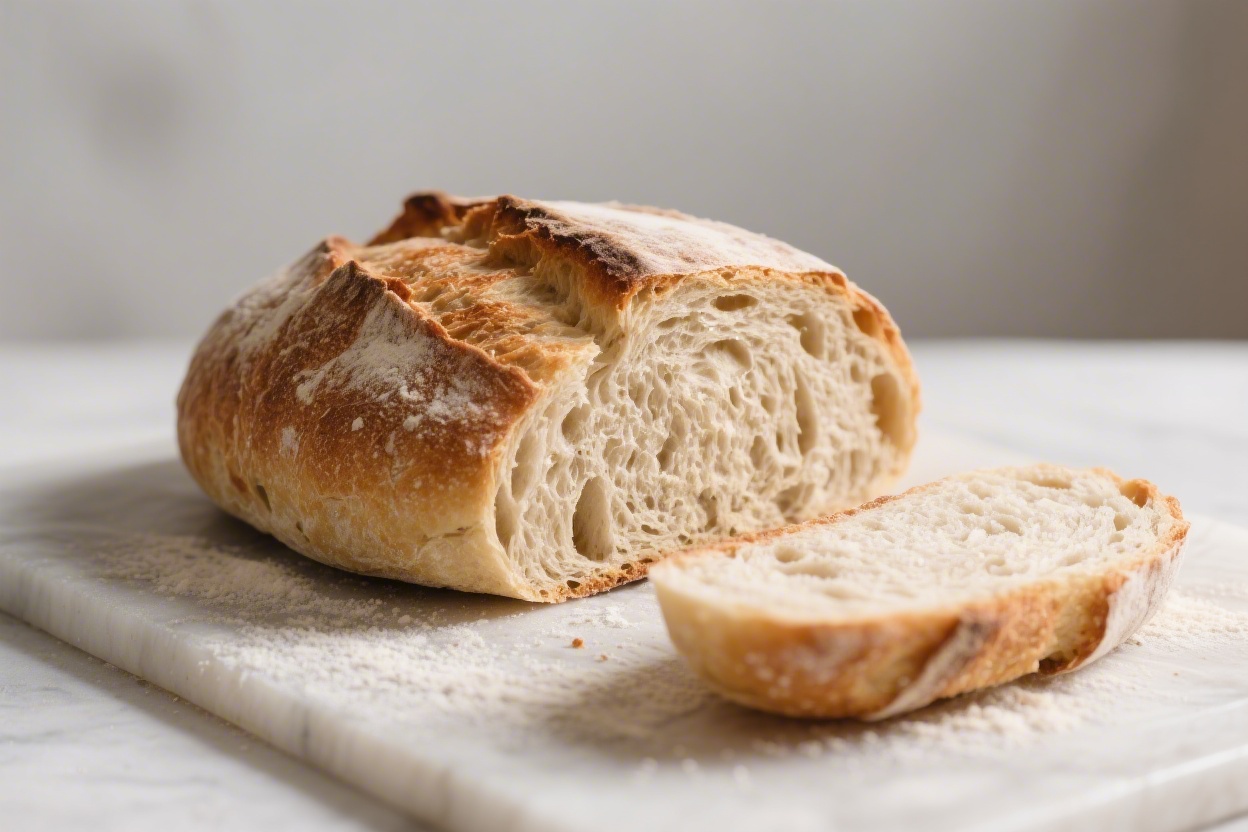
Load into the hot Dutch oven. Bake covered for 20 minutes, then uncover, reduce to 450°F (232°C), and bake 20–25 minutes more until deep golden-brown with blistered crust.
Cool completely. Place on a rack and let rest at least 1 hour. Cutting too soon can make the crumb gummy and collapse the structure.