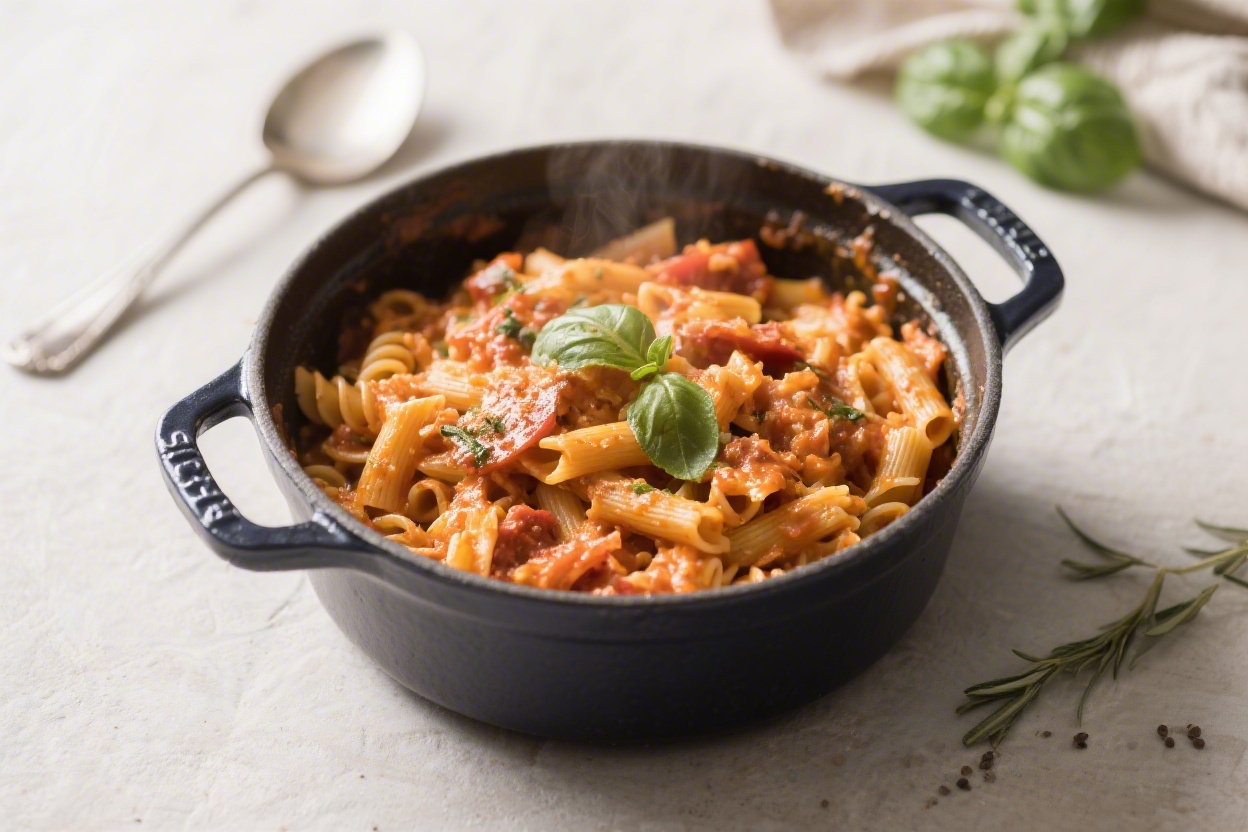
Prep your ingredients. Slice the onion and garlic. Halve the tomatoes.
Chop herbs. If using greens, roughly chop them. Measure out the broth so it’s ready to pour.
Choose the right pot. Use a wide, heavy pot or deep skillet with a lid.
A large surface area helps the pasta cook evenly and prevents clumping.
Sauté the aromatics. Add olive oil to the pot over medium heat. Cook the onion with a pinch of salt for 3–4 minutes until slightly softened. Add garlic and cook 30 seconds until fragrant.
Layer the base flavors. Stir in tomatoes, red pepper flakes, and dried herbs.
Cook 1–2 minutes to soften the tomatoes and bloom the spices.
Add pasta and liquid. Lay the dry pasta in the pot. Pour in the broth. The liquid should just cover the pasta.
If not, add a splash of water. Season with 1 teaspoon salt and a few grinds of pepper.
Bring to a boil, then simmer. Increase heat to high to bring the pot to a boil, then reduce to a lively simmer. Stir frequently for the first few minutes to prevent sticking.
Cook until al dente. Simmer uncovered for 9–12 minutes, depending on pasta shape, stirring now and then.
If the liquid reduces too fast, add a little more broth or water. You want a loose, saucy consistency near the end.
Finish with greens and herbs. When the pasta is nearly done, stir in spinach or kale. Cook 1–2 minutes until wilted.
Add chopped basil or parsley, and adjust seasoning. For brightness, add a squeeze of lemon and a pinch of zest.
Make it glossy. If the sauce looks thin, simmer 1 more minute. If it’s too thick, add a splash of water or broth.
The pasta will keep absorbing liquid, so aim for slightly saucy.
Serve with cheese. Plate immediately and top with grated Parmesan and extra herbs. A drizzle of olive oil or a pat of butter adds a luxurious finish.