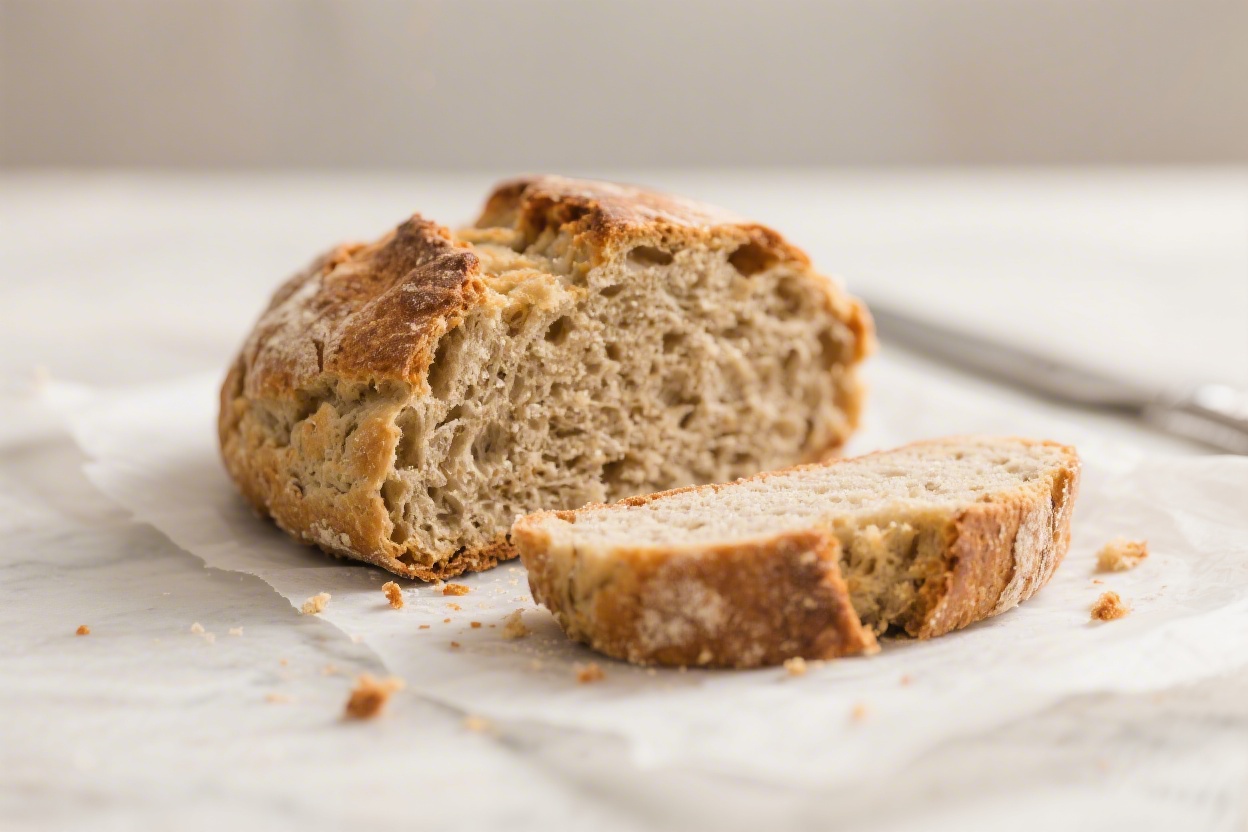
Preheat the oven. Set it to 425°F (220°C). Line a baking sheet with parchment or lightly flour a cast-iron skillet.
Mix the dry ingredients. In a large bowl, whisk 3 cups all-purpose flour, 1 cup whole wheat flour (or use all AP flour if you prefer), 1 teaspoon baking soda, 1 teaspoon kosher salt, and 1–2 tablespoons sugar if using.
Cut in the butter. Add 4 tablespoons cold unsalted butter, cut into small cubes. Use your fingertips or a pastry cutter to rub it into the flour until it looks like coarse crumbs.
Work quickly to keep the butter cold.
Combine the wet ingredients. In a measuring cup, whisk 1¾ cups buttermilk with 1 egg (optional). If you don’t have buttermilk, mix 1¾ cups milk with 1 tablespoon lemon juice or white vinegar and let it sit 5 minutes.
Bring the dough together. Pour the buttermilk mixture into the dry ingredients. Stir with a wooden spoon just until a shaggy, sticky dough forms. Do not overmix.
Shape gently. Turn the dough onto a lightly floured surface.
With floured hands, pat it into a round about 7–8 inches wide and 1½–2 inches tall. If it’s too sticky, sprinkle a bit more flour, but keep it soft.
Score the top. Place the round on the prepared sheet or skillet. Using a sharp knife, cut a deep cross on top, about 1/2 inch deep.
This helps the center bake through.
Bake. Bake at 425°F for 15 minutes, then reduce the oven to 400°F (200°C) and bake 20–25 minutes more. The loaf is done when it’s deep golden and sounds hollow when tapped on the bottom. Internal temperature should be around 200°F (93°C).
Cool slightly. Transfer to a rack and cool at least 20 minutes before slicing.
This sets the crumb, so it doesn’t turn gummy.
Serve. Slice thick and enjoy warm with butter, jam, honey, or alongside soup or stew.