Irish Soda Bread Recipe – Simple, Rustic, and Ready in Under an Hour
Irish soda bread is the kind of recipe you make when you want something warm and homemade without a lot of fuss. No yeast, no kneading marathons, and no waiting around for dough to rise. It comes together quickly, bakes into a golden crust, and fills your kitchen with that cozy, fresh-bread smell.
The texture is hearty but tender, and the flavor is subtly tangy from the buttermilk. Serve it warm with butter and jam, or dip it into a soup or stew. It’s everyday baking at its best.
Why This Recipe Works
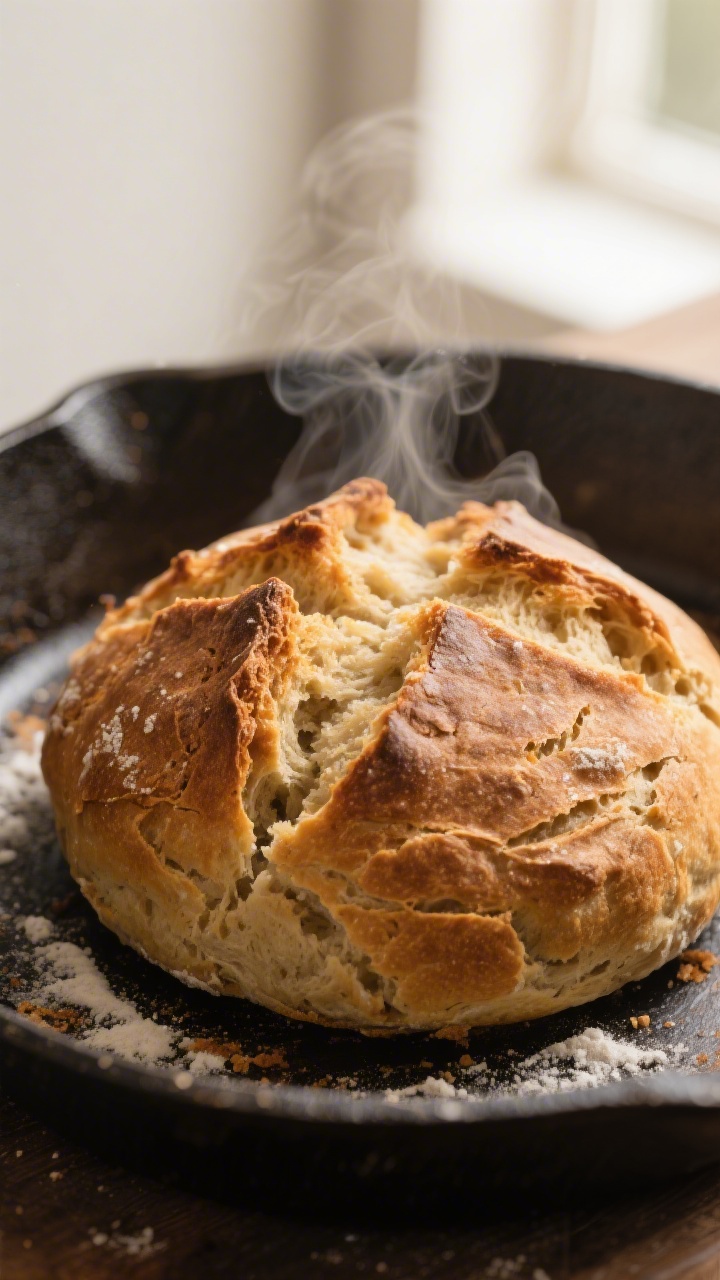
This classic loaf relies on a simple chemical reaction between baking soda and acidic buttermilk.
That means the dough rises fast without yeast, which makes it ideal for beginners or busy cooks. The mixture of all-purpose flour and a touch of whole wheat flour gives the bread structure and a nutty flavor, while a small amount of cold butter keeps the crumb tender. A quick stir is all it needs—overmixing will toughen it.
Finally, the distinctive cross cut on top helps the center bake evenly and creates those rustic edges everyone loves.
Shopping List
- All-purpose flour – the base of the loaf
- Whole wheat flour (optional but recommended) – for flavor and texture
- Baking soda – the leavening agent
- Kosher salt – for seasoning
- Granulated sugar (optional) – a small amount to balance the tang
- Unsalted butter – cold, for tenderness
- Buttermilk – provides acidity and moisture
- Egg (optional) – adds richness and helps with structure
- All-purpose flour for dusting – to handle the sticky dough
How to Make It
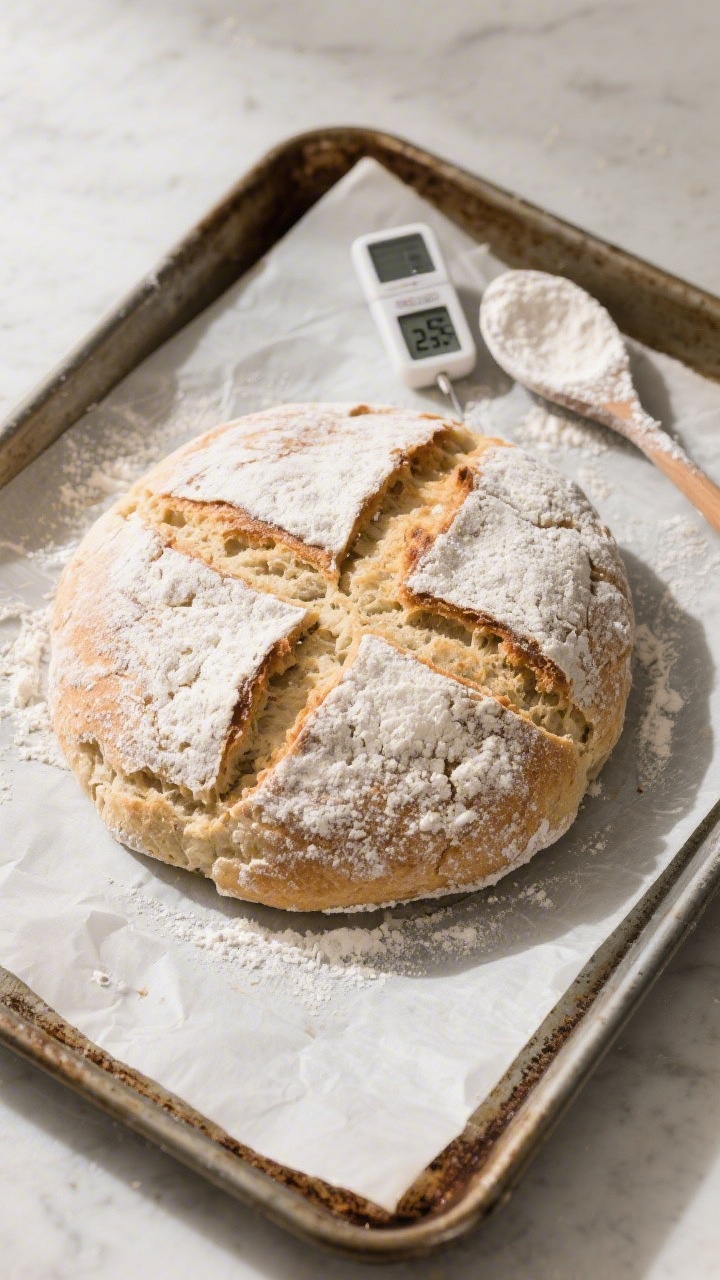
- Preheat the oven. Set it to 425°F (220°C). Line a baking sheet with parchment or lightly flour a cast-iron skillet.
- Mix the dry ingredients. In a large bowl, whisk 3 cups all-purpose flour, 1 cup whole wheat flour (or use all AP flour if you prefer), 1 teaspoon baking soda, 1 teaspoon kosher salt, and 1–2 tablespoons sugar if using.
- Cut in the butter. Add 4 tablespoons cold unsalted butter, cut into small cubes. Use your fingertips or a pastry cutter to rub it into the flour until it looks like coarse crumbs.
Work quickly to keep the butter cold.
- Combine the wet ingredients. In a measuring cup, whisk 1¾ cups buttermilk with 1 egg (optional). If you don’t have buttermilk, mix 1¾ cups milk with 1 tablespoon lemon juice or white vinegar and let it sit 5 minutes.
- Bring the dough together. Pour the buttermilk mixture into the dry ingredients. Stir with a wooden spoon just until a shaggy, sticky dough forms. Do not overmix.
- Shape gently. Turn the dough onto a lightly floured surface.
With floured hands, pat it into a round about 7–8 inches wide and 1½–2 inches tall. If it’s too sticky, sprinkle a bit more flour, but keep it soft.
- Score the top. Place the round on the prepared sheet or skillet. Using a sharp knife, cut a deep cross on top, about 1/2 inch deep.
This helps the center bake through.
- Bake. Bake at 425°F for 15 minutes, then reduce the oven to 400°F (200°C) and bake 20–25 minutes more. The loaf is done when it’s deep golden and sounds hollow when tapped on the bottom. Internal temperature should be around 200°F (93°C).
- Cool slightly. Transfer to a rack and cool at least 20 minutes before slicing.
This sets the crumb, so it doesn’t turn gummy.
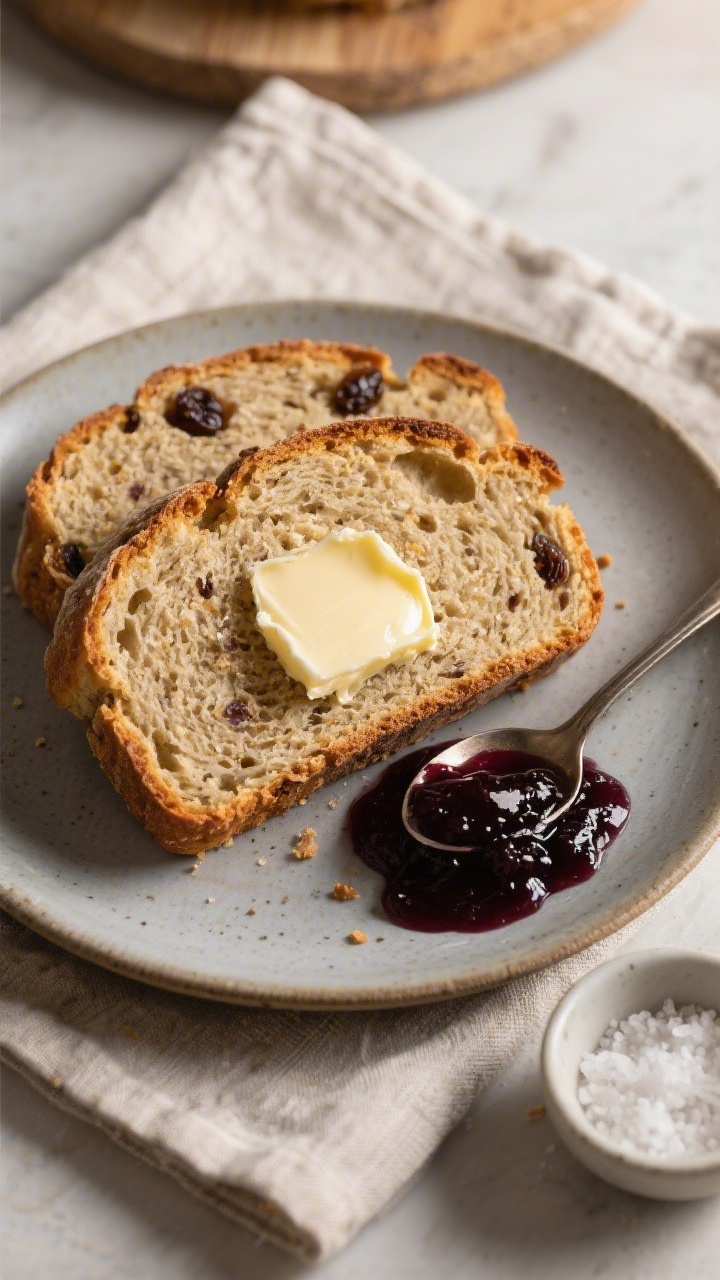
- Serve. Slice thick and enjoy warm with butter, jam, honey, or alongside soup or stew.
How to Store
Keep the loaf at room temperature, wrapped in a clean kitchen towel or paper bag, for up to 2 days. Avoid airtight plastic, which can soften the crust and make it gummy. For longer storage, slice and freeze in a zip-top bag for up to 2 months.
Reheat slices in a toaster or oven at 350°F (175°C) for 8–10 minutes to refresh the crust.
Health Benefits
Irish soda bread keeps ingredients simple, so you know what’s in your slice. Using some whole wheat flour adds fiber, B vitamins, and minerals, and it helps you feel fuller longer. There’s no added oils beyond a small amount of butter, and no refined additives or preservatives.
Pairing it with protein-rich toppings—like eggs, smoked salmon, or Greek yogurt with honey—makes for a more balanced meal. It’s a wholesome option when you want bread without a long ingredient list.
Common Mistakes to Avoid
- Overmixing the dough: Stir just until it comes together. Overworking leads to a tough, dense loaf.
- Using stale baking soda: Old soda loses strength.
Replace it every few months for reliable rise.
- Skipping the cross cut: It’s not just decorative; it helps heat reach the center for even baking.
- Adding too much flour while shaping: A slightly sticky dough bakes up moist. Too much extra flour dries it out.
- Cutting too soon: Let it rest at least 20 minutes so the crumb sets and slices cleanly.
Recipe Variations
- Classic Brown Bread: Use 50–75% whole wheat flour, add 2 tablespoons wheat bran or wheat germ, and increase buttermilk slightly to keep the dough moist.
- Raisin (Spotted Dog): Fold in 3/4–1 cup raisins or currants and 1 teaspoon orange zest. A touch more sugar (up to 3 tablespoons) complements the fruit.
- Seeded Soda Bread: Add 2–3 tablespoons each of sunflower seeds and pumpkin seeds, plus 1 tablespoon sesame or flax for crunch and nutrition.
- Herb and Cheddar: Mix in 1 cup shredded sharp cheddar and 2 tablespoons chopped fresh chives or parsley.
Great with soups.
- Gluten-Free: Use a 1:1 gluten-free flour blend with xanthan gum and reduce mixing to the bare minimum. The texture will be a bit more tender but still delicious.
- Dairy-Free: Use plant-based milk soured with lemon juice, and swap butter for a neutral oil or vegan butter. Add 1 extra tablespoon flour if the dough feels too wet.
FAQ
Can I make it without buttermilk?
Yes.
Mix milk with lemon juice or white vinegar—about 1 tablespoon acid per 1¾ cups milk—and let it sit 5 minutes. This creates the acidity needed to activate the baking soda.
Why is my soda bread dense?
It’s usually from overmixing, not enough buttermilk, or old baking soda. Keep the dough slightly sticky, use fresh leavening, and handle it gently.
Can I bake it in a loaf pan?
You can, but the crust will be softer and the center may take longer to bake.
Use a 9×5-inch pan, lower the oven to 400°F, and extend the bake time as needed. Check for a 200°F internal temp.
How do I know when it’s done?
Look for a deep golden crust, a hollow sound when you tap the bottom, and an internal temperature around 200°F. If the top browns too quickly, tent with foil for the final minutes.
What should I serve with Irish soda bread?
It’s perfect with butter and jam, sharp cheddar, smoked salmon, or alongside soups and stews.
It also makes great toast the next day.
Can I add eggs or skip them?
Eggs add richness and help with structure, but they’re optional. The bread will still rise and bake well without them—just slightly less tender.
How do I get a crisp crust?
Bake on a preheated sheet or cast-iron skillet, avoid storing in plastic, and re-crisp in a 350°F oven for a few minutes if needed.
Is this an authentic Irish recipe?
The method is traditional, though many modern recipes use a mix of flours and optional additions like sugar or raisins. At its core—flour, baking soda, salt, and buttermilk—it stays true to Irish soda bread’s roots.
In Conclusion
Irish soda bread is proof that simple ingredients can deliver big results.
With no yeast and minimal effort, you get a warm, rustic loaf that’s ready in under an hour. Keep it classic or try a variation that fits your taste. Either way, you’ll have a reliable, everyday bread that’s perfect for breakfast, dinner, or anything in between.
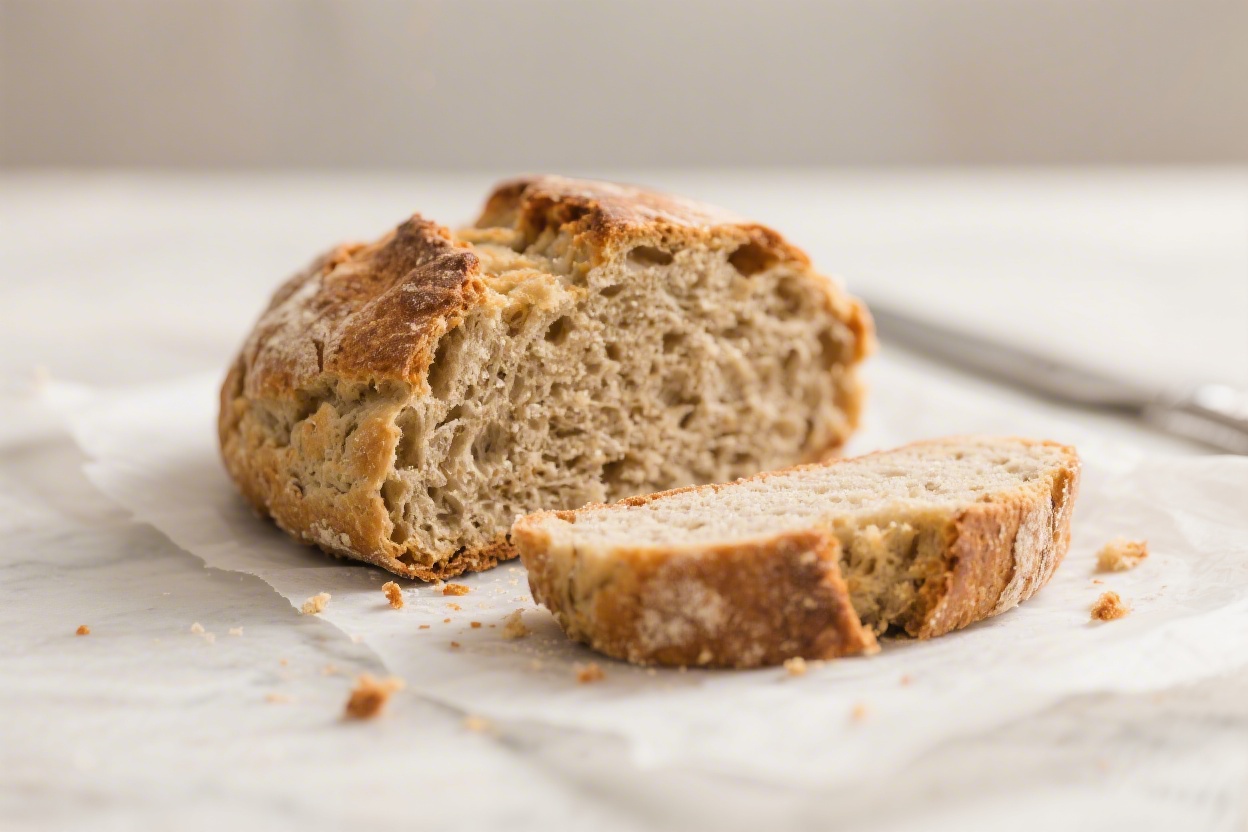
Irish Soda Bread Recipe - Simple, Rustic, and Ready in Under an Hour
Ingredients
Method
- Preheat the oven. Set it to 425°F (220°C). Line a baking sheet with parchment or lightly flour a cast-iron skillet.
- Mix the dry ingredients. In a large bowl, whisk 3 cups all-purpose flour, 1 cup whole wheat flour (or use all AP flour if you prefer), 1 teaspoon baking soda, 1 teaspoon kosher salt, and 1–2 tablespoons sugar if using.
- Cut in the butter. Add 4 tablespoons cold unsalted butter, cut into small cubes. Use your fingertips or a pastry cutter to rub it into the flour until it looks like coarse crumbs.Work quickly to keep the butter cold.
- Combine the wet ingredients. In a measuring cup, whisk 1¾ cups buttermilk with 1 egg (optional). If you don’t have buttermilk, mix 1¾ cups milk with 1 tablespoon lemon juice or white vinegar and let it sit 5 minutes.
- Bring the dough together. Pour the buttermilk mixture into the dry ingredients. Stir with a wooden spoon just until a shaggy, sticky dough forms. Do not overmix.
- Shape gently. Turn the dough onto a lightly floured surface.With floured hands, pat it into a round about 7–8 inches wide and 1½–2 inches tall. If it’s too sticky, sprinkle a bit more flour, but keep it soft.
- Score the top. Place the round on the prepared sheet or skillet. Using a sharp knife, cut a deep cross on top, about 1/2 inch deep.This helps the center bake through.
- Bake. Bake at 425°F for 15 minutes, then reduce the oven to 400°F (200°C) and bake 20–25 minutes more. The loaf is done when it’s deep golden and sounds hollow when tapped on the bottom. Internal temperature should be around 200°F (93°C).
- Cool slightly. Transfer to a rack and cool at least 20 minutes before slicing.This sets the crumb, so it doesn’t turn gummy.
- Serve. Slice thick and enjoy warm with butter, jam, honey, or alongside soup or stew.
Printable Recipe Card
Want just the essential recipe details without scrolling through the article? Get our printable recipe card with just the ingredients and instructions.